Tuesday, August 27, 2019

Infertility among couples on a dramatic increase over the years

Goral Gandhi

Infertility is becoming more common in India than most people think. One in seven couples trying to have a baby suffer from infertility. Recent studies also reveal that after a year of trying to conceive, as many as 15 percents of couples are unable to conceive a child.

The study also revealed that after two years, about 10 percent of couples had still remained unsuccessful in achieving a pregnancy. The scenario is dramatically different than it was 20 or 30 years ago. Moreover, infertility is expected to increase in the future. By 2025, almost 10 million couples are expected to encounter problems in having a baby.

Goral Gandhi

“Infertility among couples has dramatically increased over the years. About a decade ago, only two in 10 women would be infertile. The number has now increased to six. Most women in India are unaware of safe clinics, and unethical practices are quite rampant,” said Dr Sunitha, Managing Director of Sumathi Hospitals.

Surprisingly, only 45 percent of couples visit a doctor when they are trying to conceive, and a mere 1 percent of infertile couples seek treatment. To make matters worse, 55 percent of women are not even aware of ovulation tracking products like fertility monitors and 75 percent of men don’t. The crunch of IVF experts and embryologists only adds to the problem.
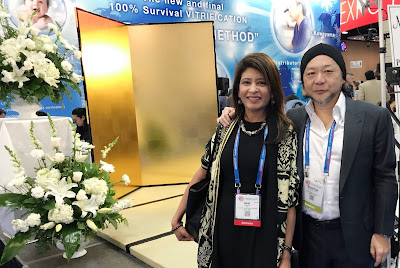
Goral Gandhi IVF

Infertility among couples is a result of a wide range of factors. Some lifestyle factors leading to infertility include increasing marital age, increased alcohol and tobacco consumption and obesity. Clinical factors that contribute to infertility include increasing prevalence of medical conditions such as PCOS, endometrial tuberculosis and Sexually Transmitted Infections (STIs).
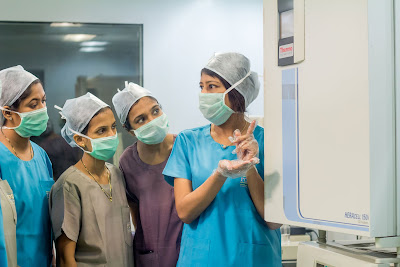
Dr Goral Gandhi

With the issues related to infertility on a rise, the nation requires clinical experts to deal with the incumbent cultural stigma as well as the medicine. In a time of dramatic technological changes, while countries like Japan are researching the use of stem cells to create animal embryos that contain human cells, India is preventing assisted reproductive techniques like surrogacy.

According to Goral Gandhi, a Mumbai-based embryologist, the country needs more clinical experts to facilitate assisted reproduction that can aid infertile couples.

Goral Gandhi News

Goral Gandhi has been at the forefront of embryology and IVF in India and is currently serving as the Scientific and Laboratory Director at Indo Nippon IVF Bandra Mumbai.

Dr Goral Gandhi also has been instrumental in establishing assisted conception labs – with a focus on better practices in IVF, as well as education in all aspects of embryology and laboratory management.

Dr Goral Gandhi Mumbai


Infertility in couples doesn’t mean it’s a dead-end for procreation. Assisted reproductive techniques like In Vitro Fertilisation (IVF), Intra Cytoplasmic Sperm Injection (ICSI), etc are bringing hope to a large number of couples struggling with infertility. All that’s needed is improved facilities and increased availability of assisted reproduction experts in the country.

The practice of embryology taking assisted reproduction to new successes

Goral Gandhi

The maturation of embryos into healthy babies through assisted reproduction isn’t just a typical process but takes time and precision in the hands of embryologists to bring out the desired outcome of IVF.

As assisted reproduction is increasingly being opted as a means to help couples conceive, the role of an embryologist becomes pivotal. Providing intrinsic embryo and patient care in equal measure, embryologists around the world put dedicated efforts to foster healthy growth of embryos.

Goral Gandhi IVF


The practice of assisted reproduction has got staunch support from embryologists around the world, who have contributed towards this breakthrough technology. Some of them are as follows:   

  • Dr. Alex C Varghese, Chief Embryologist MSc., is an expert in Clinical Embryology and has initiated many successful training programs in ART, helping design and setting up of many IVF units in India. He is a world-famous medical author and a proactive researcher in Canada.
Dr Goral Gandhi

  • Dr. Dhannya Binoy MD, Fellowship in Clinical Embryology, is a reproductive health consultant who has delivered profound work in quality control aspects of the IVF Lab.

  • Dr. Goral Gandhi, having done her Masters in Applied Biology, is India’s noted authority in the practice and study of Embryology. Goral Gandhi is responsible for the design and establishment of many successful assisted conception laboratories in India and one in Ghana. She has been helping patients through better treatment practices and awareness around assisted reproduction techniques. Goral Gandhi has offered her expertise in IVF, ICSI, Donor egg IVF, Surrogacy, Frozen embryo transfer, Egg freezing, Segmented IVF.
Goral Gandhi News

  • Liesl Nel-Themaat, a Senior Embryologist at the IVF Lab Director of the University of Colorado Advanced Reproductive Medicine, has been an active committee member of research biology and ART. She is an IVF Lab Team Leader and Endocrine/Andrology Lab Director and has researched in reproductive lab sciences.

  • Dr. Samantha Pfeifer is the Chairwoman of the American Society of Reproductive Medicine’s Associate Professor of Clinical Obstetrics and Gynecology and Clinical Reproductive Medicine. She is also a board-certified obstetrician/gynecologist and reproductive endocrinologist. Her specialties include in vitro fertilization, ovulation induction and fertility preservation.
Dr Goral Gandhi Mumbai

The work of an embryologist is mostly behind closed laboratories, where they foster healthy growth of embryos. As a study and practice, embryology has been concerned with the development of embryos and the process of assisted hatching in the same dish where the embryo is destined to continue its development. It is not a typical 9-5 job, rather requires relentless hours to cater to the critical timing needs of the entire process.

As the clinical laboratory provides the closest possible imitation to the natural process of reproduction, it is the work of the embryologists that determines the outcome of the process. “Embryologists are not just doctors merely following a protocol. It takes a certain dedication and passion for the work that we do, whether it is the QC measures that we so vehemently follow or making the best use of patient material to produce successful chance at pregnancy,” explains Dr Goral Gandhi.

Clinical embryologists are responsible for retrieving eggs, assisting with In Vitro Fertilization, maintaining clinical records and running tests on eggs. They often work in hospitals and fertility clinics, but may also perform laboratory work or seek posts in academia.

With such dedicated scientists, each individual’s contribution brings new breakthroughs in approaching infertility. The achievement in fertility care hinges on the collaboration between doctors, patients and the embryologists, who help in realizing the full potential of assisted reproduction and medical technology.

Tuesday, August 20, 2019

How assisted fertility treatments ensure better reproductive health in developing nations?

Goral Gandhi

Assisted reproduction has been an effective treatment option for couples in overcoming their problems related to infertility and plan their pregnancies better. The number of conceptions ending in a live birth with ART has been ever-increasing, but the treatment remains reserved mainly in developed countries.

Goral Gandhi IVF

 Assisted conception has been inaccessible or unavailable in the resource-deprived countries, but active doctors and scientists in the field are increasingly reaching out to people, helping them get fertility treatments and conceive babies. 

The wide spectrum of ART treatments is now reaching many regions. It has seen development in the developing nations as technological advancements in the sector open its door to provide multifaceted health-care.

Dr Goral Gandhi

There have been several reproductive health experts and doctors in India, working to prioritize the practice and researching of ART. One such leading embryologist and reproductive health consultant in India, Dr Goral Gandhi, has worked dedicatedly to suppress the challenges inherent in clinical skills training in India and to improve the overall ART performance. 

She has played a major role in overcoming the unique challenges faced by the region in adoption assisted conception.

Goral Gandhi News

The technology and social restraint posed a challenge for the adoption of treatment, especially in developing countries like India and South Africa, which Goral Gandhi has been trying to mitigate through her original research in the field, as well as educating people and generating awareness. She has also trained more than 500 embryologists and dedicated her career to improving IVF process and overall patient care in developing regions, majorly India.

Further opening about fertility treatments in India, patient outreach and efficacy of therapy show a significant improvement. Anjali Widge of the Population Council, New Delhi reported that there were more than 60 centers offering ART in India, almost all in the private sector. 

Dr Goral Gandhi Mumbai


As the technology and availability of techniques improve, it is expected to provide a means to extend assisted reproductive technologies, reducing their expense and extending the limit.

Dr. Sonia Malik, another advocate of reproductive health and IVF in India, has been keenly working in the field of ART, introducing adequate physical and diagnostic facilities through optimized laboratories in the country, helping both men and women lead a fuller and better life.

She goes great lengths in helping understand how infertility is still seen as a woman’s condition than a man in the developing countries. Labelling women “childless” underpins social stigma and economic hardship for them. In developing regions, the issue of infertility is still synonymous with inability or incapability. 

Bringing the issue into light, renowned doctors like Goral Gandhi, Sonia Malik, and others, are working to bring accessible infertility treatment in emerging countries and extending patient outreach and education.

EMBRYOLOGISTS AND THE PROCESS OF IVF | GIVING CHILDLESS COUPLES THE BEST CHANCE AT PREGNANCY

Goral Gandhi

In recent times, ART advancements have been nothing less than revolutionary in treating infertility related problems and help couples reproduce healthy babies. Through IVF, numerous couples have been able to conceive and bring their babies into the world. 

That said, the role, need and the impact of an embryologist in an IVF the procedure is largely unrecognized in the world of artificial reproduction.

Goral Gandhi IVF

The success of the fertility treatment depends largely on embryologists’ precision and quality control in the entire process, i.e. from the development of a zygote (fertilized egg) to its maturation. 

The embryologists work to imitate the natural process of reproduction, modeling the process in a safe and effective manner – except with more precision and certainty. With their decision of selecting the most competent and viable embryo, the embryologists are vested with the responsibility of IVF cycle success by producing desired outcomes.

Dr Goral Gandhi


Dr Goral Gandhi, a leading an embryologist who dedicatedly works towards ART and IVF success in India, emphasizes on generating awareness and better opportunities for clinical embryology in India. Moreover, Goral Gandhi has also offered her expertise to more than 500 embryologists in various aspects of IVF, embryology, quality care and management in clinical laboratories.

 While talking about the process of verification in LIFE conference, Goral Gandhi stated the need to further develop embryology in India, which will build tremendous hope for patients by giving them a chance to preserve and extend their fertility through embryo cryopreservation, oocyte verification, etc.

Goral Gandhi News

Clinical embryology, both a study and practice has been increasingly pursued in India and worldwide, as increasing number of couples faces the problems of infertility. For embryologists, the embryo is the patient that they are caring for, which could eventually turn into a healthy baby. 

Therefore, they have to carefully evaluate patient materials, be it egg, sperm, or embryo and make crucial decisions about their quality and utilization. Also, the state-of-art technology and advance expertise play an essential role in the success of IVF through building an optimum environment for embryo culture, and embryo freezing.

Dr Goral Gandhi Mumbai

Reflecting on the need to freeze oocytes (eggs) and embryos as well as make the frozen eggs /embryos viable, Dr. Goral Gandhi strongly supports the practice of egg freezing for fertility preservation in clinics, to help women have a chance to have their own genetic child when they wish to, helping as many childless couples experience the bliss of parenthood. 

Adding to the need for improving oocyte cryopreservation, Dr. Samantha Pfeifer, chairwoman of the American Society of Reproductive Medicine’s practice committee says, “The technology and technique are getting better, and success rates are good.”

Determining the direction which embryo development can lead to, embryologists worldwide sustain and foster the healthy growth of embryos and their eventual culmination into future babies, thus, giving the desired outcome to the entire process of IVF.


Assisted reproduction in Ghana: The Indian at the heart of the country’s IVF centers

Goral Gandhi

Ghana has lately emerged as one of the most preferred destinations for fertility treatments around the world. There are several reasons why cross-border reproductive travel to Ghana remains a popular option among infertile couples living in Ghana’s neighboring countries, and of Ghanaian people living in Europe and the US.

The high quality of treatment and better results offered by the Ghanaian clinics and the circumvention of restricting regulations in the country of residence form the two biggest factors that drive medical tourists from several countries across the globe seeking fertility treatments to Ghana. Lower treatment costs and the availability of matching donor material in Ghana add to it.

Dr Goral Gandhi Mumbai

However, a major contribution to Ghana’s emergence as a fertility treatment hub has been from the Mumbai-based clinical embryologist Goral Gandhi. 

In charge of the structure and foundation of several active-assisted conceptions labs in India and one in Ghana, Goral Gandhi has an expertise of more than 20 years in the field of IVF and assisted reproductive procedures.

Goral Gandhi News

Dedicated to keeping up remarkable achievement rate at all these labs or research centers, Goral Gandhi has had a rather huge impact on the health and IVF sector – taking care of thousands of IVF and ICSI cases and helping more than 3,500 couples expand their families. 

The Mumbai-based embryologist has provided training in IVF to more than 500 embryologists from 18 nations. Goral Gandhi has also trained Embryologists and Clinicians from Ghana for hands-on experience covering all parts of IVF including IUI, ICSI, troubleshooting, verification and laboratory management since 2000. 
Dr Goral Gandhi


Being one of the very first clinical embryologists to bring assisted reproduction to Ghana, Goral Gandhi has set up extremely fruitful Fertility Preservation modules at various labs. Her current research projects are centered on the choice of the most reasonable and ailment free embryo along with the unique conceivable implantation potential using PGD and PGS methods.

IVF treatment and surrogacy used to be two of the least talked about methods of conception topics in Ghana. Despite these medical breakthroughs being a beacon of hope to a large number of childless couples worldwide, discussing assisted reproductive technology had been almost a taboo in the conservative society of Ghana.

Goral Gandhi IVF


Social stigmatization for choosing assisted reproductive techniques to conceive a baby has been a common woe in Ghana. Several couples keep their decision under wraps until the child is delivered. Despite technological advancements, some couples don’t divulge details of their method of conception for the fear of being criticized or shamed by family and friends. 

However, organizations like WHO and fertility scientists like Goral Gandhi are working towards creating awareness and de-stigmatizing the adoption of assisted reproductive procedures for conception amongst the people in Ghana. For people living in other countries, Ghana remains a fertility haven due to the availability of quality fertility treatments

Goral Gandhi


Friday, August 16, 2019

How quality control during human embryo culture leads to improved IVF outcomes


Quality management in IVF clinics today, focus on creating an optimal environment for embryo culture. Quality Control (QC) and Quality Assurance (QA) in clinical laboratories increase the chances of success of the IVF outcome, and embryologists play a crucial role in quality assessments to make sure the highest standards are maintained.

Dr Goral Gandhi Mumbai

Working to imitate the natural process of reproduction, except with more precision and certainty, an embryologist is directly involved in helping couples conceive their children – by ensuring healthier embryos, proper embryo implantation as well as assisting with In Vitro Fertilization, maintaining clinical records and running tests on eggs and embryos. That said when it comes to quality maintenance, there are plenty of crucial decisions left to embryologists.


Goral Gandhi, an embryologist in India who has established several training programs for practicing embryologists and ascertained guidelines on good practice for IVF laboratories discussed the quality practices contributing to performance and success in the embryo laboratory.


Dr Goral Gandhi

“Q C is a rigorous process that is performed in all IVF labs. The guidelines are not restricted to the clinical laboratory protocol but cover every aspect of the process including staff, equipment and safety, quality control, and medical training. However, the onus is majorly on the team of embryologists that carry out the entire procedure. I always lay extra emphasis on good laboratory practice and train my embryologists to perform their work with the utmost diligence, with the greatest of their abilities,” explained Goral Gandhi.

Goral Gandhi IVF

Assisted Reproductive Techniques (ART) today have evolved into branches that not only help parents conceive but also treat specific hormone-related illnesses. It does not only refer to IVF but also the treatments tailored to patients’ unique conditions.
Another embryologist Evelyn E. Neuber, Ph. D., HCLD (ABB), Clinical Research Coordinator at the Center for Advanced Reproductive Services at UCONN, tells us about the quality protocols followed in a clinical laboratory.

Goral Gandhi News

“I verify and document countless Q C measurements, including the room temperature, the pH of the media used to grow the embryos, lot numbers of reagents, microscope temperature settings, and gas tank levels. Only when I am 100% certain that everything is in optimal working order do I open the IVF lab for patients,” she said.
Embryologists work dedicatedly on maximizing the chance of success of IVF and minimize risk. With a wide range of new reproductive options available to patients, the quality assurance and control has become a mandate to help achieve the desired outcome, and maintain the best of health for patients and their offsprings.

Goral-Gandhi


“We critically work on quality parameters in terms of checks and protocols we follow in our lab when it comes to equipment, pressure modules, quality control of culture medium and disposables, handling of oocytes and spermatozoa, evaluation of results such as fertilization rates, cleavage rates, embryo quality, pregnancy rates, implantation rates, survival the rate for frozen embryos, etc,” added Goral Gandhi.

Performing all the core embryology techniques – eggs retrieval, ICSI, biopsies, and cryopreservation, and quality controls, the work of an embryologist, thus, determines the efficacy of the IVF process.

Dr Goral Gandhi explains process of Embryo Cryopreservation

Preserving motherhood for when you think you’re actually ready
The option of banking embryos, not just for medical reasons but for social factors too, has been a great conduit provided by modern medicine and sciences. Defying the constraints of the natural biological clock, women worldwide have been able to plan better for their pregnancy, and extend their childbearing years through ART and associated options.
Goral Gandhi
The process of embryo freezing has been one such breakthrough medical option for childless parents and couples intending to conceive at later stages in life. It has given women from all walks of life the liberty to plan their motherhood through storing embryos for future pregnancies. “This option can give you peace of mind that whatever happens you may be able to have a family in the future,” says a spokesperson of the Human Fertilization and Embryology Authority (HFEA), the fertility watchdog.

Dr Goral Gandhi Mumbai

With ART advancements, women are fortunate enough to deliver healthy babies whenever they want, irrespective of their physical conditions or ambitions in life. But what exactly happens during the process of embryo cryopreservation or embryo freezing?

Dr Goral Gandhi

“Embryo cryopreservation is a clinical process that requires a great degree of precision and care. It is the process of freezing and storing embryos in subzero temperatures to preserve their superlative quality. Embryos can remain frozen for a prolonged period and can be thawed to lead to viable pregnancies as and when the couple desires,” says Goral Gandhi, the Founder as well as Scientific and Laboratory Director at Indo Nippon IVF, Mumbai, India.

Goral Gandhi IVF

Dr. Goral Gandhi, a leading embryologist has actively worked towards the science of ART and IVF in India, helping numerous women in their journey towards parenthood. Training more than 300 embryologists, she has educated doctors, scientists and embryologists in various aspects of IVF, embryology, and emphasizes on quality care and management in clinical laboratories.

Goral Gandhi News

In cases when a person may wish to freeze their eggs or use them to plan their later pregnancies, the doctor may recommend In Vitro Fertilization (IVF) or Intracytoplasmic Sperm Injection (ICSI). The process of embryo freezing initiates when the patient intakes hormones to ensure on-time ovulation. Fertility medications also stimulate egg production, which is then left in the laboratory with sperm produces to commence the process of natural fertilization. The fertilized egg- called an embryo, is then monitored by an embryologist, who is vested with the decision to choose a suitable embryo for implantation.

Goral Gandhi

For when it comes to embryos, the credibility and accuracy of grading affects the outcome of the pregnancy, therefore, an embryologist plays a crucial role in deciding which embryo(s) to go further with, explains Goral Gandhi, who has done pioneering research work on quality control in laboratories.
“If you’re at all considering starting a family and are not necessarily exactly where you want to be for any reason, it’s a good idea to come in and talk to a fertility specialist about freezing embryos, or about other options. So I think knowledge is power and there are a lot of options,”